commission portrait artist logo

Wednesday, 27 April 2016

Fine Art Commissions offers an incredibly unique service that is greatly valued by our artists


‘All creative people need a Fine Art Commissions. Not just for marketing and sourcing work, but for valuable second opinions when needed.’ - Nicky Philipps


‘I like the fact that Fine Art Commissions is a one stop shop. I also like the competition with other artists and to be able to secure the opinion of Sara Stewart who has seen so many works of art.’ - Nick Bashall


‘If it was not for Fine Art Commissions, I’d probably be in the gutter painting portraits for my attic.’ -  Jamie Coreth  


Thursday, 17 March 2016

Self-portraits through the ages

We take a look at some self-portraits by much-loved artists working in Britain through the ages, including William Hogarth and Vanessa Bell:

Self-portraiture is a richly diverse, enigmatic genre that has particular poignancy in the history of art, documenting the rare moment when the artist enjoys a unique sense of freedom as both subject and creator.

Artists have recreated their own image since the Middle Ages; a time when self scrutiny and personal salvation were of great importance. During the Renaissance, the humanist emphasis on the individual coincided with the elevated status of the artist. The discovery of oil painting allowed artists to develop techniques that revolutionised painting. As an intimate form of self-expression, personal legacy and public self-advertisement, the self-portrait raises complex issues of identity, politics, social status and artistic skill. 


'Self-portrait', Sir Godfrey Kneller, 1685 © The National Gallery, London
Born in Germany and trained as an artist in Amerstam and Italy, Sir Godfrey Kneller later established himself as a leading portrait artist in England. After settling here in 1676, he was introducted to Court circles by the Duke of Monmouth and later appointed as principle painter to the Crown by Charles II. This powerful self-portrait gives us an idea of why his portraits were considered amongst the best produced in Europe at the time. 

'Self-portrait', Allan Ramsay, c.1737-39 © The National Gallery, London
 'He (Allan Ramsay) and Mr Reynolds...our favourite painters, and two of the very best we ever had' - Horace Walpole.

Born in Edinburgh, Allan Ramsay later studied in London, Rome and Naples and was appointed as painter to George III. It is believed that this early self-portrait was produced in Italy where Ramsay completed his artistic training and shows the influence of the Italian baroque. 

Ramsay depicts himself wearing a white neck-band and shirt ruffle made from rich velvet drapery. It is believed that a copy of the portrait was framed as a pendant, painted at the time of Ramsay's marriage to his first wife in 1739. 

'Self-portrait', William Hogarth c. 1757 © The National Gallery, London
In this self-portrait, William Hogarth depicts himself painting Thalia, the Muse of Comedy. Ramsay sits in a large mahogany armchair, wearing an open white shirt, green velvet coat, stockings and brown breeches. He holds a palette knife and brushes and contemplates the white outline of Thalia, who holds a book under her right arm and mask in her left hand. 

'Self-portrait', Vanessa Bell c. 1958. The Charleston Trust © BBC Your Paintings
Vanessa Bell was a central figure in the Bloomsbury Group, alongside her husband Clive Bell and sister Virginia Woolf. Bell's early work conformed to the conventional traditions of the New English Art Club, but was later influenced by the first Post-Impressionism exhibition that took place in 1910 and the progressive ideas of Roger Fry, which surfaced in a stripped back, simplified style of painting defined by bold outlines and non-descriptive colour. 

The first Post-Impressionist exhibition included works by Cezanne, Gauguin, Van Gogh, Matisee and Picasso, which gave Bell a 'sudden liberation and encouragement to feel for oneself, which were absolutely overwhelming.'

After the First World War, Bell, similarly to other artists of her generation, returned to a more naturalistic style. Bell maintained a lifelong passion for simplified decorative patterns and colour that originated in the creative collaboration of the Omega Workships. This was later reflected in the interiors of Charleston, the Sussex farmhouse that she shared with her husband, as well as her distinctive book-jacket designs for the Hogarth Press. 

This self-portrait was painted when Bell was nearly 80 and hangs in the garden room at Charleston. Bell's portraits have often been subject to biographical readings that connect them to the death of her sister Virginia and eldest son Julian Bell. However, if we re-contextualise works such as this self-portrait, we see a lively and forceful artist who paints as a challenging act of self-expression.  

Friday, 4 March 2016

Delacroix's portraits

To coincide with 'Delacroix and the Rise of Modern Art' that has recently opened at the National Gallery, we take a look at a selection of Delacroix's portraits. As both an exponent of the Grand Style and celebrated as one of the first modern masters, the exhibition pays homage to Delacroix's widespread artistic legacy. Delacroix is acknowledged as the champion of Romanticisim and was much admired by avant-garde painters in Paris including Courbet, Van Gogh, Gauguin and Matisse. 

'The first merit of a painting is to be a feast for the eye' - Eugène Delacroix


A painter of 'the invisible, the impalpable, reverie, the nerves, the soul; and this he did without any means other than contour and colour' - Charles Baudelaire

'We all paint in Delacroix's language' - Paul Cezanne

Eugène Delacroix, 'Self-portrait', about 1837 © RMN Grand-Palais (musée du Louvre)/Jean-Gillies Berizzi
Delacroix's strong jaw, intense stare, glossy black hair and sophisticated appearance, accompanied by a sense of antipathy, marks this self-portrait as archetypally Romantic and visually exemplifies why Delacroix was named 'the tiger' by Charles Baudelaire. 

Eugène Delacroix, 'Young orphan Girl in the Cemetery', 1824 © Musée du Louvre)/A. Dequier - M. Bard
This early work by Delacroix was for a long time believed to be a preparatory piece for the 'Massacre at Chios.' The young girl is clearly defined against the more hazy background of the sky and forlorn cemetery. She gazes beyond the frame and her dark-ringed eyes suggest a sense of sadness and solitude that is enhanced by the dark colours and sombre landscape. 

Eugène Delacroix, 'Head of a Woman', 1822 ©The Athenaeum
This painting is also referred to as 'A Mad Woman' and reflects a prevailing curiosity in abnormal states of mind that greatly interested artists such as Delacroix and Gericault, who pitched themselves against Enlightenment rationality. There was a common belief at the time that physical appearance gave an insight into character, especially in the case of madness and death. 

Eugène Delacroix, 'Louis-Auguste Schwiter', 1826-30 © The National Gallery, London
This portrait of Louis-Auguste Schwiter, who was himself a landscape and portrait painter, was begun when Delacroix returned to France in 1826 after a period in England. Rejected by the Salon in 1827, Delacroix made alterations to the work and it was later completed in 1830. It is possible that the portrait was influenced by the painter Sir Thomas Lawrence, who was the subject of an essay written by Delacroix in 1829. 

Eugène Delacroix, 'Portrait Frederic Villot' c. 1832 © The National Gallery, Prague
This intimate portrait of Marie-Joseph Frederic Villot reflects his good friendship with Delacroix. He was also an engraver and art historian who acted as paintings curator of the Louvre from 1848 -1861. 

Thursday, 21 January 2016

Portraits of HM Queen Elizabeth II through the decades


We take a look back at some of the most memorable and distinguished depictions of HM Queen Elizabeth II painted during her reign, which includes our artist Nicky Philipps's full-length portrait that was gifted by The Royal Mail to the her Majesty and now hangs in the Throne Room at Buckingham Palace. The Queen is one of the most illustrated people of all time and these paintings chart both the fascinating development of portraiture and shifting approaches to monarchy.

Coronation Portrait of Her Majesty The Queen, Sir Cecil Beaton, Gelatin Silver print, 1953 © Royal Collection Trust
Cecil Beaton was chosen to photograph the Queen's coronation in Westminster Abbey on 2nd June 1953, which took place more than a year after the death of King George VI and the Queen's subsequent accession to the throne. Beaton's portrait depicts The Queen holding the Sceptre and Orb and wearing the Imperial State Crown, set against Westminster Abbey. 

Queen Elizabeth II, Sir Herbert James Gunn, Oil on Canvas, 1954 © the artist's estate, photo credit: Parliamentary Art Collection

Standing in the Throne Room at Buckingham Palace, the Queen is wearing her coronation dress, Diamond Diadem, Queen Victoria's collet diamond necklace, drop earrings and purple Robe of Estate. This state portrait was commissioned to celebrate the Queen's coronation in 1953 and she is shown standing beside the Imperial State Crown and Sceptre. 

The intricate embroidery on her Majesty's dress, which includes pearls and crystals, allegorical symbols of the Commonwealth as well as wheat sheafs and olive branches, emblems of unanimity and affluence, was carried out by the Royal School of Needlework and took approximately 3,500 hours to complete.
  Queen Elizabeth II, Pietro Annigoni, Oil tempera on board, c. 1950's © the artist's estate, photo credit: Jaguar Heritage
This is the Italian artist Pietro Annigoni's first and iconic depiction of the Queen, which was painted for the Worshipful Company of Fishmongers and hangs in Fishmongers Hall. The artist's use of tempera conveys his interest in the Italian Renaissance. In this portrait, the recently crowned Queen is depicted wearing her striking dark blue Order of the Garter within a pastoral setting.

Queen Elizabeth II, Pietro Annigoni, Tempera grassa on paper on panel, 1969 © The National Portrait Gallery, London

'I did not want to paint her as a film star, I saw her as a monarch, alone in the problems of her responsibility.' - Pietro Annigoni

Fifteen years later, Annigoni was commissioned by the National Portrait Gallery to paint a second portrait of the Queen, which was thoroughly different in approach to the artist's first, more romantic depiction of the monarch. In this instance, she also wears ceremonial robes but is set against an enigmatic and forlorn landscape. 
HM Queen Elizabeth II, Lucian Freud, Oil on Canvas, 2000- 2001 © Royal Collection Trust 2012 © The Lucian Freud Archive

Unlike other depictions of the Queen, Freud's depiction is a smaller, head and shoulders painting, only 20 centimeters high. The process of painting this expressive and controversial image of the monarch was compared by the artist to a polar expedition. Freud chose to focus particularly on the 'inner likeness' of such a well-known and much-publicised face, although after starting the portrait he added the Queen's Diamond Diadem as a way to make her more immediately recognisable. 
HM Queen Elizabeth II with Willow, Vulcan, Candy and Holly, Nicky Philipps, Oil on Canvas, 2013 © Nicky Philipps   
'There is a dignity to the full-length portrait that Philipps has produced, and it shows her enjoyment in her portrayal of the robes, ''and her desire to make things sparkle''.' - Karen Wright, Art Critic, The Independent

Commissioned by the Royal Mail Group, Nicky Philipps's full-length portrait of HM The Queen was originally intended to be a head and shoulders for the first-class stamp series celebrating the 60th anniversary of her Majesty's coronation. 

Nicky later chose to depict the Queen in her robes, wearing a white dress and crimson sash with the Order of the Garter. Nicky's original portrait was completed in 2013 from original sketches worked on in Buckingham Palace, however in this later version Nicky incorporated the Queen's four corgis into the composition.

Thursday, 3 December 2015

Nicky Philipps picks her favourite portrait painters

Nicky Philipps's impressive commissions include a full length portrait of HM Queen Elizabeth II, which hangs in the Throne Room at Buckingham Palace, a double portrait of TRH's Princes William and Harry and Falklands hero Simon Weston OBE. Nicky has also recently starred in 'Goya - Visions of Flesh and Blood', a film that travels to significant places in Spain such as the Prado Museum in Madrid in order to enrich our understanding of Francisco de Goya's life and art. 

'Nicky Philipps paints portraits and still lifes which can be compared with those of John Singer Sargent in their freshness of application and clarity of drawing.' - Desmond Shawe - Taylor, Surveyor of The Queen's Pictures. 

Here, we bring together a selection of  treasured portraits by some of Nicky's favourite artists:

Anthony Van Dyck, 1559 - 1641

'Self-portrait by Sir Anthony van Dyck', 1640-1, © National Portrait Gallery, London

Diego Velazqzez, 1599 - 1660

'Portrait of Innocent X', Diego Velazquez, 1650

Rembrandt van Rijn, 1606 - 1669

'Self-portrait with two circles', Rembrandt Van Rijn, c. 1665 - 9 © English Heritage

Joshua Reynolds, 1723 - 1792

'The art of seeing Nature...is in reality the great object, the point to which all our studies are devoted.' - Sir Joshua Reynolds. 

'Sir Joshua Reynolds', Joshua Reynolds, c. 1747-9 © National Portrait Gallery, London  

Henry Raeburn, 1756 - 1823

Adam Ferguson (1723–1816)
'Adam Ferguson', Henry Raeburn c. 1790 © The University of Edinburgh Art Collection

Thomas Lawrence, 1769 - 183

'John Julius Angerstein', Sir Thomas Lawrence, c. 1790 © National Portrait Gallery, London   

Edouard Manet, 1832 - 1883

'A Bar at the Folies - Bergere', Edouard Manet, 1882 © The Samuel Courtauld Trust, The Courtauld Gallery, London

John Singer Sargent, 1856 - 1925

'Lady Agnew of Lochnaw', John Singer Sargent 1892 ©  National Galleries of Scotland

Philip de Laszlo, 1869 - 1937

Mrs Philip de László (nee Lucy Guinness) by Philip de László, 1918 Roy Fox Fine Art Photography - © de Laszlo Foundation
'Mrs Philip de Laszlo (nee Lucy Guinness)', Philipp de Laszlo, 1918, Rou Fox Fine Art Photography ©  de Laszlo Foundation

William Orpen, 1878 - 1931

'David Lloyd George, 1st Earl Lloyd - George of Dwyor, Prime Minister', William Orpen, 1927 © Tate Government Art Collection  

    Graham Sutherland, 1903 - 1980

    Graham Sutherland OM ‘Somerset Maugham’, 1949
© Tate
    'Somerset Maugham', Graham Sutherland, 1949 © Tate

    Saturday, 17 October 2015

    Must-see landscape paintings in London

    To coincide with Nicky Philipps's current landscape exhibition, 'Travels with my Paintbox' at Fine Art Commissions, we take a look at some of the gems of the genre housed in London's art galleries:

    John Constable, 'Study of Cirrus Clouds,' Victoria and Albert Museum
    John Constable, 'Study of Cirrus Clouds', c. 1822 © Victoria and Albert Museum, London
    Constable owned Thomas Forster's Researches about Atmospheric Phaenomena, which was accompanied by a series of engravings that illustrated the changes and developments of clouds. Inscribed with 'cirrus' on the reverse of the painting, this study shows the artist's scientific knowledge of cloud formations and accurate observation of the sky. 

    J.M.W.Turner, 'The Fighting Temeraire', The National Gallery
    J.M.W. Turner, 'The Fighting Temeraire', 1839, © The National Gallery, London
    Turner depicts a 98-gun ship that after playing an acclaimed role in Nelson's victory at the Battle of Trafalgar in 1805, became known as the 'Fighting Temeraire.' In 1838, the ship was towed from Sheerness to Rotherhithe to be broken up. Depicted travelling away from the sunset in an easterly direction, it is believed this painting illustrates the abatement of Britain's naval power, evoking a sense of loss that is suggested in parallels between the breathtaking sunset and old warship. 

    Painted when Turner was in his sixties, the work demonstrates his impressive mastery of the sea and sky. His heavy application of paint for the sun's rays contrasts to the scrupulous depiction of the ship's rigging. 

    James Whistler, 'Nocturne: Blue and Gold - Old Battersea Bridge', The Tate Collection
    James Abbott McNeill Whistler, 'Nocturne: Blue and Gold - Old Battersea Bridge', c. 1872-5 © Tate, London
    'By using the word 'nocturne' I wished to indicate an artistic interest alone, divesting the picture of any outside anecdotal interest which might have been otherwise attached to it. A nocturne is an arrangement of line, form and colour' - Whistler. 

    'I did not intend to paint a portrait of the bridge, but only a painting of a moonlight scene...My whole scheme was only to bring about a certain harmony of colour.' - Whistler, quoted during the Ruskin Trial. 

    Similarly to Monet's painting, Whistler also chooses a bridge as his central motif. In this case, the artist depicts Battersea Bridge, with Chelsea Church and the new Albert Bridge illuminating the backdrop. Deemed one of Whistler's most controversial works and used as evidence in the renowned Whistler-Ruskin trial in 1878, the painting was the fifth in the series of Nocturnes produced by Whistler during the 1870's. Named as Nocturnes by Frederick Leyland, whose apt label intended to combine the moonlit subject with its musical associations, Whistler's series captures the serene beauty of the Thames. 

    Inspired by Japanese woodcuts, such as Hiroshige's 'Moonlight at Ryogoko', Whistler deliberately crops part of the bridge out of the composition and exaggerates its height. Whistler completed sketches and then finished his paintings in his studio from memory, building up the canvas with transparent layers of paint that he thinned beforehand using a combination of copal, turpentine and linseed oil. 

    Paul Cezanne, 'Mount Sainte-Victoire with Large Pine', The Courtauld Gallery
    Paul Cezanne, 'Mt Sainte-Victoire with Large Pine', c. 1887 © The Courtauld Gallery, London
    Cezanne painted many representations of the landscape around his home in southern France, which he used to delve into an experimentation with form and colour. Roger Fry wrote in the catalogue for the 1910 exhibition 'Manet and the Post-Impressionists' in London that Cezanne 'showed how it was possible to pass from the complexity of the appearance of things to the geometrical simplicity which design demands.' 

    Cezanne's technique differed from other Impressionists; he painted using blocks of colour and strong outlines rater than thick, short daubs of paint, dazzling complementary colours and no definitive outlines. 

    Cezanne's simplified interpretation of the landscape, bold use colour and flattened planes of parallel brushstrokes foreshadowed abstraction and was admired by a younger generation of modernist artists. 

    Claude Monet, 'The Water-Lily Pond,' The National Gallery
    Claude Monet, 'The Water-Lily Pond', 1899 © The National Gallery, London
    Following Monet's move to Giverny in 1883, where he lived until he died, he created a water garden and built an arched Japanese style bridge 'for the purpose of cultivating aquatic plants.' Once the garden had fully evolved, Monet painted the motif of the bridge at different times of the day and under differing light conditions. In this instance, the bridge is viewed from the pond itself and is enveloped by lush reeds and willow leaves.

    Friday, 25 September 2015

    Our pick of exhibitions to see this winter

    Drawing in Silver and Gold: Leonardo to Jasper Johns

    British Museum, until 6 December 2015
    'Head of the Virgin', Rogier Van der Weyden, Metalpoint on prepared paper, mid 15th century
    This exhibition is the first to recount the technical and artistic development of metalpoint through work by renowned masters ranging from the Renaissance to the present day, including Rogier van der Weyden, Petrus Christus, Leonardo da Vinci, Raphael, Albrecht Durer, Rembrandt, William Holman Hunt and Jasper Johns. 

    Metalpoint is a challenging technique that uses metal stylus often made of silver, which traces the metal left and allows for exquisitely detailed drawings. The exhibition documents metalpoint's impressive variety as well as its revival during the 19th century when there was a renewed interested in the Renaissance.

    Simon Schama's Face of Britain

    National Portrait Gallery, until 4 January 2016
    Simon Weston, by Nicola Jane ('Nicky') Philipps, 2014 - NPG 6984 - © National Portrait Gallery, London (NPG 6984) Commissioned jointly by the National Portrait Gallery and the BBC, 2013
    'Simon Weston', Nicky Philipps, Oil on Canvas, 2014 © National Portrait Gallery, London 
    NPG P490(16)
    'Winston Churchill'. Yousuf Karsh, 1941, © Karsh/ Camera Press
    'Nicky Philipps' portrait of the Falklands veteran Simon Weston...is that rare thing: a good contemporary portrait in oil.' - Bendor Grosvenor

    In partnership with the BBC, historian Simon Schama's exhibition at the National Portrait Gallery brings together British art and history in order to explore the development, nature and significance of portraiture over the centuries. Working closely with curators, this exhibition gives us for the first time the opportunity to view the genre of portraiture through the themes of Power, Love, Fame, People and Self.

    Goya: The Portraits

    National Gallery, 7 October 2015 - 10 January 2016
    'Self-portrait before an Easel', Francisco de Goya, Oil on Canvas, 1792-95 © Museo de la Real Academia de Bellas Artes de San Fernando, Madrid 
    This landmark exhibition showcases the development of Goya's skilfully arresting portraits from his first commission, aged 37, to paint the Spanish Prime Minister, Count Floridablanca to his later, more private works painted during the 1820's when he was in France during a 'self-imposed exile.'

    During his extensive career, Goya secured commissions from across Spanish society, including the royal family, politicians, military figures and aristocrats. Following a bout of serious illness in his mid-40's, Goya became deaf. Nevertheless, his portraiture excelled and his ground-breaking abilities makes him one of Spain's most admired painters and highly respected by artists such as Delacroix, Degas and Picasso. 

    Bridget Riley, Learning from Seurat

    Courtauld Gallery, until 17 January 2016
    Bridge at Courbevoie
    'Bridge at Courbevoie', Georges Seurat, 1886-87, The Samuel Courtauld Trust  © The Courtauld Gallery, London
    When Bridget Riley painted a copy of Seurat's Bridge at Courbevoie in 1959, it represented a momentous development in her artistic exploration and marked a new awareness of colour and perception. This intimate exhibition brings together Seurat's painting with a variety of Riley's early works and showcases how she became inspired to produce the abstract paintings characterised by repeated geometric patterns for which she is most well known today. 

    Jean - Etienne Liotard

    Royal Academy, 24 October 2015 - 31 January 2016
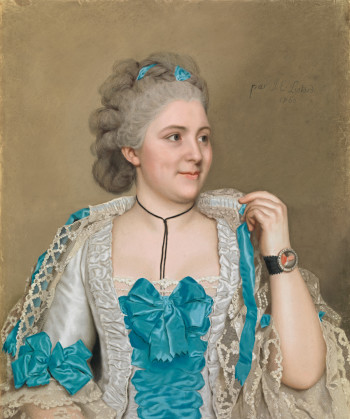
    'Julie de Thellusson-Ployard', Jean-Etienne Liotard, Pastel on vellum, 1760, Museum Oskar Reinhart. Rodolphe Dunki, Geneva; acquired 1935 Photo SIK-ISEA. Photography; Philipp Hitz
    Jean-Etienne Liotard was an outlandish and unique portraitist who vividly captured the splendour of the Enlightenment. Liotard was a master of self-promotion as well as an extensive traveller; known as 'the Turk' following a voyage to the Ottoman Empire during which he wore Oriental costume, he painted expatriates as well as what he saw around him. At the height of his power, Liotard painted members of the royal family from Britain, France and Austria and created alluring portraits in his trademark of pastels on parchment. 

    Frank Auerbach

    Tate Britain, 9 October 2015 - 13 March 2016
    Frank Auerbach Head of J.Y.M ll 1984-85
    'Head of J.Y.M II', Frank Auerbach, Oil on Canvas, 1984-85, Private Collection © Frank Auerbach

    'This part of London is my world. I've been wandering around these streets for so long that i've become attached to them and as fond as people are to their pets.' - Auerbach
    Auerbach has lived in Camden Town, London, for 50 years and it remains a focal point of his work. Painting daily, Auerbach abandons his work, scraping back to the canvas surface and starting again, repeatedly, until the painting comes together in a few hours. This show brings together paintings and drawings from the 1950s to the present day to emphasise the artist's acute perception of depth, texture and space and to highlight how his remarkable paintings can be viewed in isolation, documenting a process whereby the artist paints the same sitters or locations in a continual cycle. 

    Masters of the Everyday: Dutch Artists in the Age of Vermeer

    The Queen's Gallery, 13 November 2015 - 14 February 2016 
    'A Lady at the Virginal with a Gentleman', 'The Music Lesson, ' Johannes Vermeer, Oil on Canvas, 1662-5, Royal Collection Trust/© Her Majesty Queen Elizabeth II 2015
    Displaying 20 masterpieces from the Royal Collection by artists including Pieter de Hooch and Johannes Vermeer, the exhibition celebrates how Dutch artists painted everyday life - eating, drinking, domestic tasks, music recitals, family games - with extraordinary and meticulous skill, producing dazzling paintings that often insinuated a deeper meaning or contained moral messages recognised by the contemporary viewer.