commission portrait artist logo

Saturday, 17 October 2015

Must-see landscape paintings in London

To coincide with Nicky Philipps's current landscape exhibition, 'Travels with my Paintbox' at Fine Art Commissions, we take a look at some of the gems of the genre housed in London's art galleries:

John Constable, 'Study of Cirrus Clouds,' Victoria and Albert Museum
John Constable, 'Study of Cirrus Clouds', c. 1822 © Victoria and Albert Museum, London
Constable owned Thomas Forster's Researches about Atmospheric Phaenomena, which was accompanied by a series of engravings that illustrated the changes and developments of clouds. Inscribed with 'cirrus' on the reverse of the painting, this study shows the artist's scientific knowledge of cloud formations and accurate observation of the sky. 

J.M.W.Turner, 'The Fighting Temeraire', The National Gallery
J.M.W. Turner, 'The Fighting Temeraire', 1839, © The National Gallery, London
Turner depicts a 98-gun ship that after playing an acclaimed role in Nelson's victory at the Battle of Trafalgar in 1805, became known as the 'Fighting Temeraire.' In 1838, the ship was towed from Sheerness to Rotherhithe to be broken up. Depicted travelling away from the sunset in an easterly direction, it is believed this painting illustrates the abatement of Britain's naval power, evoking a sense of loss that is suggested in parallels between the breathtaking sunset and old warship. 

Painted when Turner was in his sixties, the work demonstrates his impressive mastery of the sea and sky. His heavy application of paint for the sun's rays contrasts to the scrupulous depiction of the ship's rigging. 

James Whistler, 'Nocturne: Blue and Gold - Old Battersea Bridge', The Tate Collection
James Abbott McNeill Whistler, 'Nocturne: Blue and Gold - Old Battersea Bridge', c. 1872-5 © Tate, London
'By using the word 'nocturne' I wished to indicate an artistic interest alone, divesting the picture of any outside anecdotal interest which might have been otherwise attached to it. A nocturne is an arrangement of line, form and colour' - Whistler. 

'I did not intend to paint a portrait of the bridge, but only a painting of a moonlight scene...My whole scheme was only to bring about a certain harmony of colour.' - Whistler, quoted during the Ruskin Trial. 

Similarly to Monet's painting, Whistler also chooses a bridge as his central motif. In this case, the artist depicts Battersea Bridge, with Chelsea Church and the new Albert Bridge illuminating the backdrop. Deemed one of Whistler's most controversial works and used as evidence in the renowned Whistler-Ruskin trial in 1878, the painting was the fifth in the series of Nocturnes produced by Whistler during the 1870's. Named as Nocturnes by Frederick Leyland, whose apt label intended to combine the moonlit subject with its musical associations, Whistler's series captures the serene beauty of the Thames. 

Inspired by Japanese woodcuts, such as Hiroshige's 'Moonlight at Ryogoko', Whistler deliberately crops part of the bridge out of the composition and exaggerates its height. Whistler completed sketches and then finished his paintings in his studio from memory, building up the canvas with transparent layers of paint that he thinned beforehand using a combination of copal, turpentine and linseed oil. 

Paul Cezanne, 'Mount Sainte-Victoire with Large Pine', The Courtauld Gallery
Paul Cezanne, 'Mt Sainte-Victoire with Large Pine', c. 1887 © The Courtauld Gallery, London
Cezanne painted many representations of the landscape around his home in southern France, which he used to delve into an experimentation with form and colour. Roger Fry wrote in the catalogue for the 1910 exhibition 'Manet and the Post-Impressionists' in London that Cezanne 'showed how it was possible to pass from the complexity of the appearance of things to the geometrical simplicity which design demands.' 

Cezanne's technique differed from other Impressionists; he painted using blocks of colour and strong outlines rater than thick, short daubs of paint, dazzling complementary colours and no definitive outlines. 

Cezanne's simplified interpretation of the landscape, bold use colour and flattened planes of parallel brushstrokes foreshadowed abstraction and was admired by a younger generation of modernist artists. 

Claude Monet, 'The Water-Lily Pond,' The National Gallery
Claude Monet, 'The Water-Lily Pond', 1899 © The National Gallery, London
Following Monet's move to Giverny in 1883, where he lived until he died, he created a water garden and built an arched Japanese style bridge 'for the purpose of cultivating aquatic plants.' Once the garden had fully evolved, Monet painted the motif of the bridge at different times of the day and under differing light conditions. In this instance, the bridge is viewed from the pond itself and is enveloped by lush reeds and willow leaves.

Friday, 25 September 2015

Our pick of exhibitions to see this winter

Drawing in Silver and Gold: Leonardo to Jasper Johns

British Museum, until 6 December 2015
'Head of the Virgin', Rogier Van der Weyden, Metalpoint on prepared paper, mid 15th century
This exhibition is the first to recount the technical and artistic development of metalpoint through work by renowned masters ranging from the Renaissance to the present day, including Rogier van der Weyden, Petrus Christus, Leonardo da Vinci, Raphael, Albrecht Durer, Rembrandt, William Holman Hunt and Jasper Johns. 

Metalpoint is a challenging technique that uses metal stylus often made of silver, which traces the metal left and allows for exquisitely detailed drawings. The exhibition documents metalpoint's impressive variety as well as its revival during the 19th century when there was a renewed interested in the Renaissance.

Simon Schama's Face of Britain

National Portrait Gallery, until 4 January 2016
Simon Weston, by Nicola Jane ('Nicky') Philipps, 2014 - NPG 6984 - © National Portrait Gallery, London (NPG 6984) Commissioned jointly by the National Portrait Gallery and the BBC, 2013
'Simon Weston', Nicky Philipps, Oil on Canvas, 2014 © National Portrait Gallery, London 
NPG P490(16)
'Winston Churchill'. Yousuf Karsh, 1941, © Karsh/ Camera Press
'Nicky Philipps' portrait of the Falklands veteran Simon Weston...is that rare thing: a good contemporary portrait in oil.' - Bendor Grosvenor

In partnership with the BBC, historian Simon Schama's exhibition at the National Portrait Gallery brings together British art and history in order to explore the development, nature and significance of portraiture over the centuries. Working closely with curators, this exhibition gives us for the first time the opportunity to view the genre of portraiture through the themes of Power, Love, Fame, People and Self.

Goya: The Portraits

National Gallery, 7 October 2015 - 10 January 2016
'Self-portrait before an Easel', Francisco de Goya, Oil on Canvas, 1792-95 © Museo de la Real Academia de Bellas Artes de San Fernando, Madrid 
This landmark exhibition showcases the development of Goya's skilfully arresting portraits from his first commission, aged 37, to paint the Spanish Prime Minister, Count Floridablanca to his later, more private works painted during the 1820's when he was in France during a 'self-imposed exile.'

During his extensive career, Goya secured commissions from across Spanish society, including the royal family, politicians, military figures and aristocrats. Following a bout of serious illness in his mid-40's, Goya became deaf. Nevertheless, his portraiture excelled and his ground-breaking abilities makes him one of Spain's most admired painters and highly respected by artists such as Delacroix, Degas and Picasso. 

Bridget Riley, Learning from Seurat

Courtauld Gallery, until 17 January 2016
Bridge at Courbevoie
'Bridge at Courbevoie', Georges Seurat, 1886-87, The Samuel Courtauld Trust  © The Courtauld Gallery, London
When Bridget Riley painted a copy of Seurat's Bridge at Courbevoie in 1959, it represented a momentous development in her artistic exploration and marked a new awareness of colour and perception. This intimate exhibition brings together Seurat's painting with a variety of Riley's early works and showcases how she became inspired to produce the abstract paintings characterised by repeated geometric patterns for which she is most well known today. 

Jean - Etienne Liotard

Royal Academy, 24 October 2015 - 31 January 2016
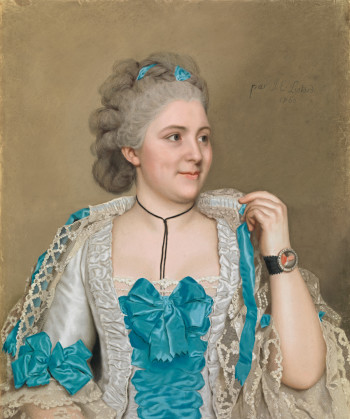
'Julie de Thellusson-Ployard', Jean-Etienne Liotard, Pastel on vellum, 1760, Museum Oskar Reinhart. Rodolphe Dunki, Geneva; acquired 1935 Photo SIK-ISEA. Photography; Philipp Hitz
Jean-Etienne Liotard was an outlandish and unique portraitist who vividly captured the splendour of the Enlightenment. Liotard was a master of self-promotion as well as an extensive traveller; known as 'the Turk' following a voyage to the Ottoman Empire during which he wore Oriental costume, he painted expatriates as well as what he saw around him. At the height of his power, Liotard painted members of the royal family from Britain, France and Austria and created alluring portraits in his trademark of pastels on parchment. 

Frank Auerbach

Tate Britain, 9 October 2015 - 13 March 2016
Frank Auerbach Head of J.Y.M ll 1984-85
'Head of J.Y.M II', Frank Auerbach, Oil on Canvas, 1984-85, Private Collection © Frank Auerbach

'This part of London is my world. I've been wandering around these streets for so long that i've become attached to them and as fond as people are to their pets.' - Auerbach
Auerbach has lived in Camden Town, London, for 50 years and it remains a focal point of his work. Painting daily, Auerbach abandons his work, scraping back to the canvas surface and starting again, repeatedly, until the painting comes together in a few hours. This show brings together paintings and drawings from the 1950s to the present day to emphasise the artist's acute perception of depth, texture and space and to highlight how his remarkable paintings can be viewed in isolation, documenting a process whereby the artist paints the same sitters or locations in a continual cycle. 

Masters of the Everyday: Dutch Artists in the Age of Vermeer

The Queen's Gallery, 13 November 2015 - 14 February 2016 
'A Lady at the Virginal with a Gentleman', 'The Music Lesson, ' Johannes Vermeer, Oil on Canvas, 1662-5, Royal Collection Trust/© Her Majesty Queen Elizabeth II 2015
Displaying 20 masterpieces from the Royal Collection by artists including Pieter de Hooch and Johannes Vermeer, the exhibition celebrates how Dutch artists painted everyday life - eating, drinking, domestic tasks, music recitals, family games - with extraordinary and meticulous skill, producing dazzling paintings that often insinuated a deeper meaning or contained moral messages recognised by the contemporary viewer. 

Friday, 18 September 2015

Female selfies in the National Portrait Gallery, London


Angelica Kauffmann, by Angelica Kauffmann, circa 1770-1775 - NPG 430 - © National Portrait Gallery, London
Angelica Kauffman, Oil on Canvas c. 1770-75 © National Portrait Gallery, London
Kauffman's self-portrait was one of many that celebrated her identity as a female painter. Depicted with the tools of her trade, Kauffman's modest but nonetheless self-assured pose asserts that her professional status is in keeping with the righteousness deemed appropriate for a woman. Kauffman's international reputation was such that in 1768 she became one of the Royal Academy's founding members. 

Laura Knight was the first artist to be made a dame and the first woman to become a full member of the Royal Academy. Knight had not been allowed to attend life drawing classes at art school, which she found deeply frustrating. Nevertheless, this seminal  self-portrait emphasises her skill at depicting the nude figure. The vibrant red tones and sophisticated composition visualise the freedom and courage she found after joining the Newlyn school in 1907, an artistic community in Cornwall. 

Self-portrait, Dame Laura Knight, Oil on Canvas, 1913 © National Portrait Gallery, London


Thursday, 3 September 2015

Nicky Philipps tells us about the greats that inspire her landscape painting

To coincide with Nicky Philipps's first solo exhibition of landscape paintings, 'Travels with my Paintbox', which opens at Fine Art Commissions on 7th October, we asked who inspires her work:

J.M.W. Turner

'I love Turner's wild brushstrokes and the amount of paint he used. He painted with huge freedom and energy and discovered the romantic in every view.'


'Rain, Steam and Speed,' 1844 © The National Gallery, London
'Margate (?) from the sea', 1835-40 © The National Gallery, London
Jean-Baptiste-Camille Corot

'Corot is one of the few painters who made sense out of green. It is an impossible colour to work with but instead of the heavy sap greens of summer, his are very gentle, greyish hues that still appear true to life.'

'Dardagny, Morning', 1853 © The National Gallery, London
'The Leaning Tree Trunk', 1860-65 © The National Gallery, London
Edward Seago

'Edward Seago spent much of his early life on his back for medical reasons observing the clouds and is a master of skies. Sometimes I will wake up and think  'that is a Seago sky', so instantly recognisable are his colours. I think it is a testament to his ability to capture an exact moment in the day: the pink sirrus clouds of a balmy July evening, or the yellow sky that appears just before a November thunderstorm.’ 

'Evening Haze, Thurne Dyke, Norfolk', © Seago Estate, courtesy of Portland Gallery, London. Photo Credit: Norfolk Museums Service.
'The River at Earlham, Norfolk', © Seago Estate, courtesy of Portland Gallery, London. Photo Credit: Sainsbury Centre for Visual Arts, University of East Anglia. 

Thursday, 20 August 2015

HIGHLIGHTS: Artemisia Gentileschi in the Royal Collection, London

Royal Collection Trust/© Her Majesty Queen Elizabeth II 2015
This cultivated work, entitled 'Self-portrait as the Allegory of Painting' (c.1638-9), is one of only a few surviving self-portraits by Artemisia Gentileschi. In this instance, she playfully depicts herself as the female personification of painting. Gentileschi cleverly combines self-portraiture and allegory in a single image, which has its precedent in works such as a portrait medal by Felice Antonio Casoni that honours Cremonese painter Lavinia Fontana. It is believed that Gentileschi completed the portrait in England, after she was invited to visit in 1638 by King Charles I. 

This allegorical work embodies the Iconologia of Cesare Ripa, which was a widely used handbook that described painting as a 'beautiful woman, with full black hair, dishellleved, and twisted in various ways, with arched eyebrows that show imaginative thought, the mouth covered with a cloth tied behind her ears, with a chain of gold at her throat from which hangs a mask, and has written in front ''imitation.''

Gentileschi is leaning over a stone slab used to grind pigments, wearing a brown apron over her green dress and holding the tools of her trade - a brush and palette. It is possible that the brown area behind Gentileschi is a blank canvas. Areas of the ground remain exposed, suggesting shadow, which is skilfully rendered in the white edge of her rolled up sleeve as it meets the dark shadow of the exposed ground. Gentileschi has tactfully depicted herself in the act of painting and her pose suggests that she may have positioned herself in between facing mirrors. 

Gentileschi's remarkable and unusual status as a female artist strengthened her appeal for collectors, including antiquarian Cassiano dal Pozzo and this compelling portrait enriched the concept of the elevated status of the artist. 

Monday, 17 August 2015

HIGHLIGHTS: Frans Hals at The Wallace Collection, London


The Laughing Cavalier, Frans Hals, 1624  ©The Wallace Collection, London
In this lively half-length portrait, an unknown sitter is depicted close to the picture plane against a plain, grey background. By the time the painting was completed, Hals had painted several portraits as well as a group portrait of a civic militia company. This work is considered Hals's most famous piece, exhibiting the skillful way he animates his subjects. The sitter has his hand on hip, which euxdes a self-confidence that characterises several of Hals's portraits as well as giving the painting more depth. Painted with both fine and broader brushwork, the painting is unique in the artist's oeuvre for its vibrant colour; the sitter wears an exuberant doublet covered with fanciful motifs and a striking gilded pommel is discernable at his elbow. 

The purpose of the portrait has never been fully established, although it is believed that the man's costume may provide us with useful clues. The motifs on his doublet, which are embroidered in gold, red and white thread, include arrows, lovers' knots and a flaming cornucopiae - all symbolic of the pleasures and sorrow of love. As connotations of courtship, it is possible that the work functions as a betrothal portrait, yet no companion piece has been found. The  motif of the Caduceus, an attribute of the Roman God Mercury, has also led art historians to believe that this alludes to commerce and thus that the work depicts the wealthy textile merchant Tieleman Roosterman, 

In 1865, the painting was at the centre of a bidding war at a Paris auction between 4th Marquess of Hertford and Baron James de Rothschild, acquired by the former for the wealthy sum of 51,000 francs. In 1888, it was given the title 'The Laughing Cavalier' when exhibited at the Royal Academy, which emphasises the conviviliaty of the portrait. This is reinforced by the low, commanding viewpoint and the sitter's pompous pose, upturned moustache and shining eyes. 

Friday, 7 August 2015

HIGHLIGHTS: Goya and Gainsborough at the Courtauld Gallery, London

The 18th century permanent collection at the Courtauld Gallery houses magnificent examples of English portraiture, including the only full-length portrait by Francisco Goya in Britain and Thomas Gainsborough's enthralling and affectionate painting of his wife Margaret:

Portrait of Don Francisco de Saavedra
Francisco de Goya, Portrait of Don Francisco de Saavedra, 1798 The Courtauld Gallery, London
Goya's painting of Spanish politician Francisco de Saavedra was part of a double commission; the artist also painted Saavedra's close friend and ally Gaspar de Jovellanos. Both men were appointed to the two highest political offices in Spain: Minister of Finance and Minister of State. 

Saavedra sits facing the right, on a round-backed chair. Well-known for his sincerity, Saavedra seems poised as if to leave his paper-strewn desk. It is possible that the portrait's simple background shows Goya's knowledge of 18th century English portraiture, while also acknowledging Saavedra's wellordered and 'English' household. 
Portrait of Margaret Gainsborough, c.1779, The Courtauld Gallery, London
Margaret Burr married Gainsborough at the young age of 18 and it is believed that this portrait celebrates her 50th birthday. The intimacy of this painting is shown in Margaret's frontal pose, direct gaze and subtle smile. Margaret wears a mantle lined with black lace, which is draped over her head and shoulders. It is formed from an energetic swirl of brush-strokes that begin around her head and continue in the positioning of her hands. 

Gainsborough's rhythmic brushwork became increasingly evident towards the latter part of his career. He also experimented with the effects of transparency and light. This is visible in the strong silhouette of Margaret's mantle, which is illuminated by the light source behind her left side. This reflects Gainsborough's experiments with the contemporary fashion of painting transparent images on glass, which when lit from behind by candlelight could produce a luminous and dynamic light.